
Latest news
Stories
How we did
Donate
Calendar
In touch
What do you need from AGSD-UK?

I am newly diagnosed and need information.

What are the sources of help and support?

In what ways can I support AGSD-UK?

What are the sources of medical guidance?

How do I find policies, finance, reports?
Have you read the latest news?
International Pompe Day.
Find out about new Pompe information resources

Save the Date!
Main Event 2024
Rare Disease Day 2024.
Today is Rare Disease Day! This rarest of days, 29th February is a great opportunity to raise awareness about rare conditions. Visit https://www.rarediseaseday.org/ to find out more about how to get involved in this international campaign. Thanks go to all our...

Cipaglucosidase alfa (Pombiliti®) is accepted for use within NHS Scotland.
Cipaglucosidase alfa (Pombiliti®) is accepted for use within NHS Scotland The Scottish Medicines Consortium has completed its assessment of cipaglucosidase alfa and has advised that this offers an additional treatment choice as a long-term enzyme replacement therapy...

Virtual Festive Event.
AGSD-UK is holding a Virtual Festive Event on the 9th of December at 1.00pm. Come along and make sure you wear a Festive hat, as there will be a prize for the best headgear. We will have a Quiz and time for everyone to catch up. For more information, please contact...

Update on the DTX401 programme for GSD1a.
Ultragenyx have provided the following community update on the development of DTX401, their investigational gene therapy for the potential treatment of GSDIa. GSDIa Community Update

Newborn Genomes Programme.
GSDs on list of conditions for inclusion in Newborn Genomes Programme research study. Genomics England has published an initial list of conditions that will be screened for as part of their forthcoming Generation Study, which includes some GSDs. The study will...
NICE recommends cipaglucosidase alfa plus miglustat.
The National Institute for Health and Care Excellence has today published final guidance recommending cipaglucosidase alfa (CIPA) plus miglustat, within its marketing authorisation, as an option for treating late-onset Pompe disease in adults.
Use the scroll links to move back and fore through our news stories.
If you have a GSD news story message us or see Notes for contributors.
Read some personal stories
Do you have an interesting personal story to tell? Just message us or visit the Notes for contributors.
For personal stories on an individual GSD, visit the page for that GSD.

Nina Contreras D’Agosto
GSD1b
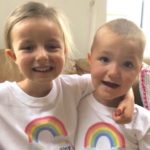
Esme and Dexter
Andersen
GSD4
GSD4

Julia László
Andersen
GSD4
GSD4

John Foxwell
Pompe
GSD2
GSD2

Alphie Wretham
GSD9a

Chloe Donald
Von Gierke
GSD1a
GSD1a

Ruben Briggs
GSD9a

Amanda Porter
Pompe
GSD2
GSD2

Walker twins
GSD9a

Sue Davey
Pompe
GSD2
GSD2

Ciara Harkins
Von Gierke
GSD1a
GSD1a

Caroline Holdstock
Hers
GSD6
GSD6

Trushal Pindolia
Von Gierke
GSD1a
GSD1a

Jae Machin
GSD9

Marilyn Silver
Tarui
GSD7
GSD7

Mylo Moore
Cori
GSD3a
GSD3a

Andrea Duckworth
Pompe
GSD2
GSD2

John Davey
McArdle
GSD5
GSD5

Michael Taylor
Tarui
GSD7
GSD7
Jeanne Graham
McArdle
GSD5
GSD5

Jennifer Howells
McArdle
GSD5
GSD5

Anosha Kahn
Cori
GSD3
GSD3

Sam Murduck
Pompe
GSD2
GSD2
Vicky Clarke
Pompe
GSD2
GSD2

Andy Williams
McArdle
GSD5
GSD5
Nikki Christie
Cori
GSD3
GSD3

Mike Nicholls
Pompe
GSD2
GSD2

David Thompson
McArdle
GSD5
GSD5

Tony Mitchell
Pompe
GSD2
GSD2
Margaret Carter
McArdle
GSD5
GSD5

Melissa
McArdle
GSD5
GSD5

Personal stories
What and who we are
- National support group for those affected by Glycogen Storage Disease (GSD) and their families.
- Membership based with an elected board of trustees.
- A company limited by guarantee and a registered charity.
- Collaborators with UK rare disease and international GSD groups.

Keep in touch
Register FREE with AGSD-UK to keep in touch with the latest developments and future conferences, workshops, courses and fundraising events. It helps you keep in touch with other patients and families. You will receive our magazine, Glisten, by email.